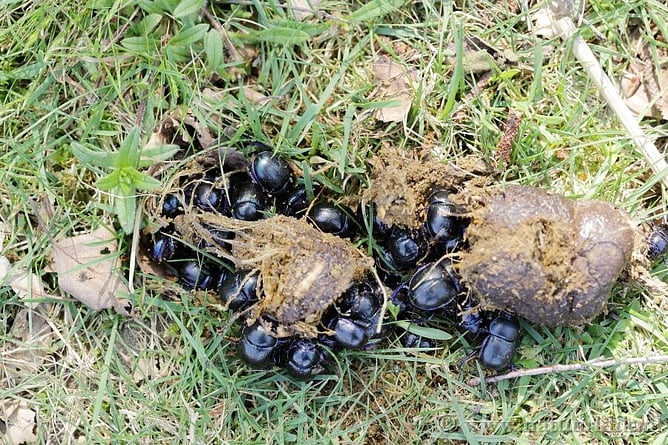
They may be small, but dung beetles have the potential to make a significant contribution to New Zealand’s pastoral farming systems.
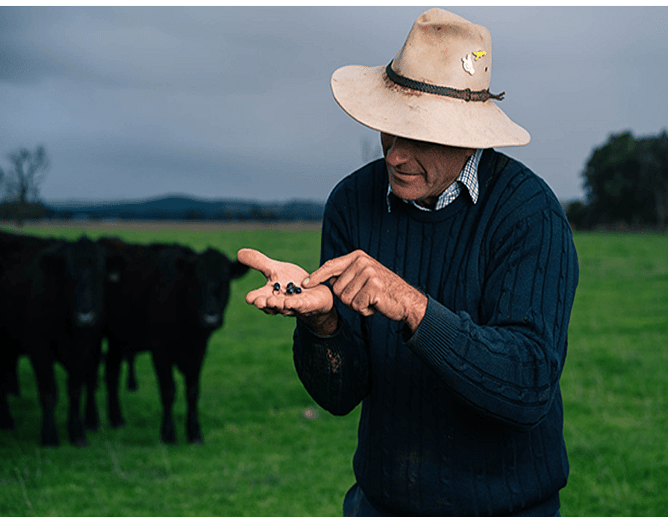
Dr Shaun Forgie, Co-founder and Director of Dung Beetle Innovations, has spent years working to establish dung beetles as a sustainable farm management tool in New Zealand. He says these tiny workers can help farmers turn livestock dung into a valuable resource for soils, pastures and waterways.
With more than 100 million tonnes of livestock dung accumulating across New Zealand farms each year, managing that waste has implications for soil health, pasture utilisation, nutrient cycling and water quality. Pasted markdown
Turning waste into a resource
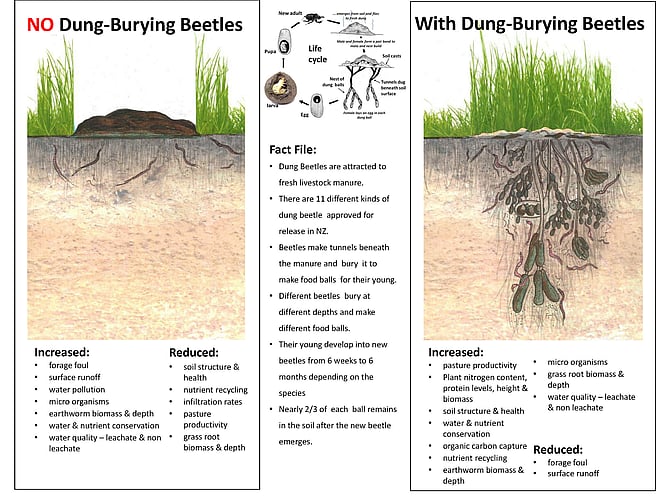
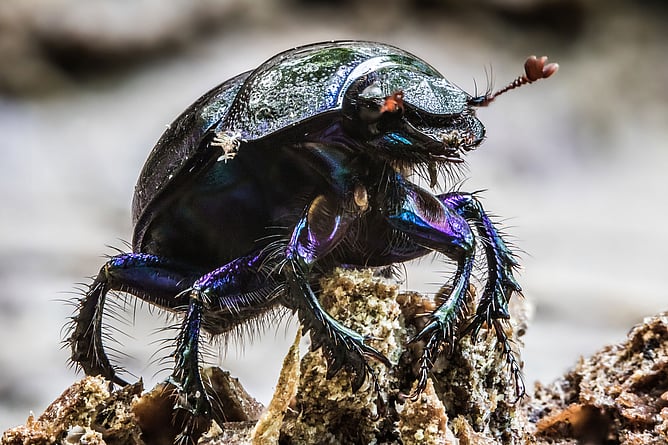
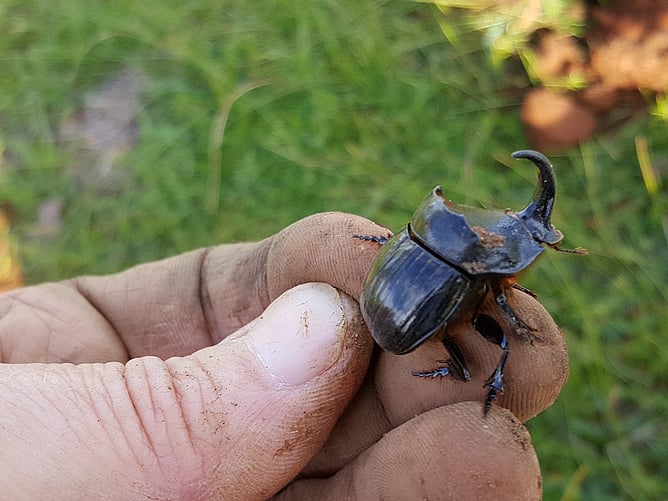
Dung beetles are attracted to fresh livestock manure, tunnelling beneath it and burying dung underground to create food balls for their young. Different species bury dung at different depths, and their young develop into new beetles over a period ranging from six weeks to six months, depending on the species.
According to Shaun, this process can deliver a range of benefits including improved nutrient cycling, soil structure, water and nutrient conservation, pasture productivity and root development, while helping reduce forage fouling and surface runoff.
Rather than leaving nutrients sitting on the soil surface, dung beetles help move organic matter down into the soil profile, where it can become a free sustainable fertiliser and carbon resource for pasture and soil biology.
Another tool for improving water quality
Shaun also sees an important role for dung beetles alongside existing approaches to improving freshwater outcomes.
Research published in 2018 by Shaun and other scientists from Manaaki Whenua Landcare Research examined the impact of dung beetle feeding and nesting activity under simulated rainfall conditions on New Zealand pasture.
According to Dung Beetle Innovations, the research found dung beetle activity reduced surface runoff volumes and suspended contaminants by between 49% and 81% on 11-degree pasture slopes during severe rainfall events.
Shaun says dung beetles should not be seen as a replacement for other environmental initiatives, but as an additional on-pasture tool that can work alongside planting, fencing and other catchment initiatives by significantly helping address contaminants before they reach waterways.
Farmers seeing the difference
For farmers who have established dung beetle populations, the results are increasingly visible in their paddocks.
Otorohanga beef and sheep farmer Rob Atkinson released dung beetles in 2016 and says they have since spread approximately 14 kilometres.
“In the last couple of seasons, they have increased in number to have a major impact on dung removal on the farm.”
Rob says sheep dung can be removed completely by the larger beetles, while cattle dung is generally removed within several days, leaving only a thin crust rather than dried pats sitting on pasture for months. He has also noticed fewer flies around the farm during summer.
Matamata dairy farmer John Vosper, who released beetles in 2017, says the evidence of their activity is now “all over the place”, while Peter Barrett of Linnburn Station in Central Otago has also seen beetles survive and establish following their release in 2018.
The Lewis road creamery quote is a good one given the size and success of the brand, Prem Mann, the Chairman, says quality product from grazing cows starts with healthy nutrient rich soils, which his dung beetles contribute to on the farms where they source milk from.
Establishing dung beetles on farm
Founded in 2014, Dung Beetle Innovations breeds, distributes and supports the establishment of dung beetle colonies across New Zealand.
Its Four Seasons Package includes up to four species across four colonies, providing dung beetle activity for most of the year. One package is designed to provide enough beetles for establishment on an average-sized farm of around 2,000 stock units, or approximately 300 cattle.
Dung Beetle Innovations is currently offering its Four Seasons Package at a reduced price for two weeks. The standard price of $6,600 + GST has been reduced by 25% to $4,950 + GST, while farmers purchasing two or more packages receive a 35% discount, bringing the price to $4,290 + GST per package.
For Shaun, the opportunity is about making better use of a resource already available on every livestock farm.
Find out more
Dr Shaun Forgie
Co-founder & Director, Dung Beetle Innovations
Email: shaun@dungbeetles.co.nz
Phone: 0210 40 86 85
Dung Beetle Innovations