Article by Toni Bye - Mātanga Mukupara - Waste Minimisation Specialist
Catchment groups play an important role in supporting farmers to achieve positive environmental outcomes. While much attention is often focused on water quality, biodiversity and soil health, farm waste management is another area where sharing practical improvements can make a real difference.
From bale wrap and agrichemical containers to tyres, fencing materials and general farm rubbish, knowing what to do with different waste types can be complicated and the information is spread over a range of website and resources.
Recognising that waste management can be a complex issue for farmers, the WasteMINZ Farm Waste Working Group was formed with the purpose of making waste minimisation and recycling on farm easier and more achievable.
WasteMINZ is the largest representative body of Aotearoa New Zealand's waste, resource recovery and contaminated land sectors. They bring together councils, resource recovery organisations and waste operators to help solve a variety of waste challenges. Their Farm Waste Working Group is a group with local and regional council representatives from Environment Canterbury, Hastings District Council, and all six Otago councils, with a shared goal of creating practical, farmer-focused solutions.
The resources the group have developed have been tested by farmers and catchment groups. They are built around a farmer-to-farmer approach that acknowledges the realities of running a farm while highlighting practical actions that can reduce waste and improve environmental outcomes.
Resources include:
Farm waste guide – the guide outlines opportunities to minimise waste on farm and bring together management and disposal options for a wide range of farm waste materials. The intent is for the guide to be localised. Localising the guide makes it easier for farmers to identify services and solutions available in their area and can help strengthen relationships between council and catchment groups if tackled together.
Practical workshop resources – a guide to running a farmer-led workshop which can be tailored to the goals and needs of individual catchment groups. Taranaki dairy farmer and waste expert Trish Rankin has supported several workshops around the country.
Farm recycling signs – these signs are designed to make on-farm recycling systems clearer and more user-friendly.
Short videos – these videos showcase practical solutions shared by farmers for farmers, including numerous tips and tricks for effective and efficient farm waste management. (Release date likely to be late 2026.)
The workshops were delivered with the support of a number of catchment groups, organisations and individuals (acknowledged below). A total of 18 farm waste workshops and recycling drives have been delivered across Canterbury, Otago and Hawke's Bay over the past 18 months, receiving positive feedback from participating farmers. Many of these workshops were facilitated by Trish Rankin, who has worked closely with farming communities to identify practical, workable solutions.
According to Trish, there are solutions for around 80% of the waste generated on farms however in her view they're just not always well understood or easy to access. “The workshop approach is about understanding the challenges farmers face, discussing local options, and sharing simple changes that can make a difference on farm," says Trish.
By equipping farmers with practical information, local solutions and opportunities to learn from their peers, these resources and workshops help turn farm waste management from a frustrating challenge into a manageable part of everyday farm operations.
If your catchment group is interested in running a farm waste workshop or accessing the resources, visit the WasteMINZ website (wasteminz.org.nz/managing-rural-and-on-farm-waste) or contact your local council.
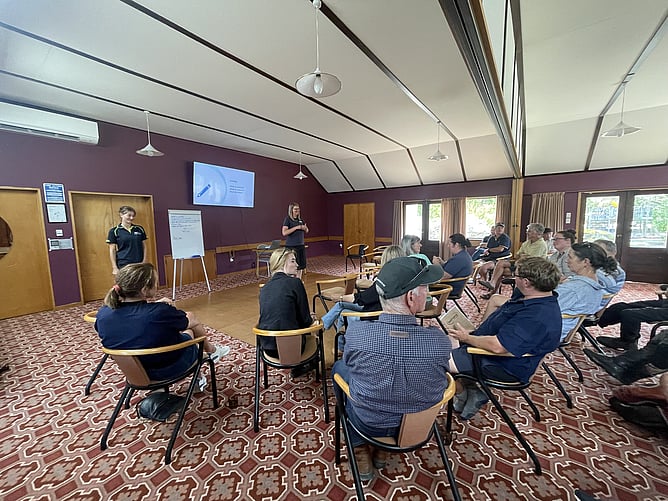
Photo acknowledgement: Teviot Valley Water Care. Taken by Deidre Perkins at a rural waste management workshop hosted by Teviot Valley Water Care and funded by Otago Catchment Community, with guest speaker Philippa Cameron of Otematata Station and What’s for Smoko.
Thanks to the following supporting organisations and individuals who have contributed to the 18 farm waste workshops:
Action Farmers Irrigation Cooperative Limited
Amuri Irrigation Company
Ashburton District Council
Ashburton Lyndhurst Irrigation
Barrhill Chertsey Irrigation Limited
Central Hawke’s Bay District Council
Central Otago District Council
Christchurch City Council
Clutha District Council
Dunedin City Council
East Otago Catchment Group
Ellesmere Sustainable Agriculture
Environment Canterbury
Guardians of Tūtira and Districts
Hakataramea Sustainability Collective
Hastings District Council
Hurunui District Council
Living Landscapes South Canterbury (Catchment Collective)
MGI Irrigation
MHV Water
Mid Canterbury Catchment Collective
NOSLaM (North Otago Sustainable Land Management)
NZ Landcare Trust
Otago Catchment Community
Otago Regional Council
Otago South Rivercare
Philippa Cameron
Rangitata South Irrigation
Selwyn District Council
Teviot Valley Water Care
Timaru District Council
Trish Rankin
Tukituki Land Care
Vet South, Balclutha
Waimakariri District Council
Waimakariri Landcare Trust
Waimate District Council
Waitaki District Council